Traditional Japanese House Pattern
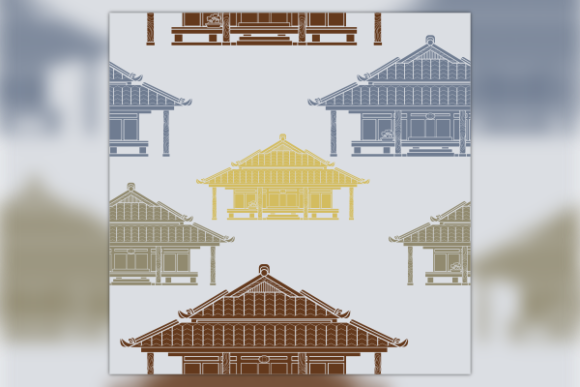
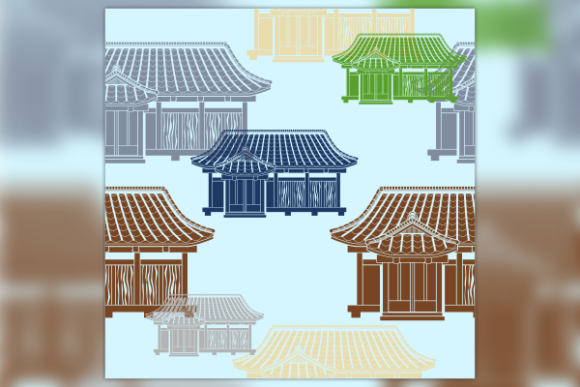
If you are a designer, educator, or small business owner looking for a visual element that instantly evokes serenity, history, and cultural depth, the Traditional Japanese House Pattern is a versatile asset worth exploring. This isn't just a decorative image; it is a collection of flat, monochrome vector illustrations arranged in a seamless layout. The design features the front view of classic Japanese architecture, rendered in an editable SVG format that allows for infinite customization.
The beauty of this resource lies in its simplicity. By stripping away complex textures and focusing on the iconic lines of traditional structures—like the sweeping gabled roofs and wooden lattice windows—you get a clean aesthetic that works across diverse mediums. Whether you need to create a background for a fabric print, design an invitation for a wedding, or develop educational materials about historical architecture, this pattern provides a professional foundation without overwhelming your project.
Why This Vector Style Matters for Modern Projects
In a digital landscape saturated with heavy, photorealistic images, there is a growing demand for minimalist, scalable graphics. The flat monochrome style of the Traditional Japanese House Pattern fits perfectly into modern UI/UX design, branding, and print media. Because the source file is an editable SVG, you have complete control over every aspect of the illustration. You aren't stuck with a static picture; you can recolor the entire set to match your brand guidelines, adjust line weights, or isolate specific architectural elements.
This flexibility is crucial for creators who need consistency. Imagine you are building a website for a travel agency specializing in Kyoto tours. You need a header image that looks crisp on a mobile screen but also prints clearly on a brochure. A raster image like a JPG would pixelate when scaled up, but an SVG-based pattern remains razor-sharp at any resolution. Furthermore, the ability to edit the vectors means you can change the color palette from black and white to a soft cherry blossom pink or a deep indigo blue to fit seasonal themes.
Real-World Applications for Creators and Entrepreneurs
The utility of this pattern extends far beyond simple decoration. Let's look at how different professionals actually integrate these assets into their daily workflows and business strategies.
Textile and Fashion Designers
Fabric designers often struggle to find patterns that are culturally respectful yet commercially viable. The seamless nature of the Traditional Japanese House Pattern makes it ideal for textile printing. You can tile the vector endlessly to create rolls of fabric for kimonos, scarves, or even modern streetwear. Since the files include high-resolution PNGs alongside the editable vectors, you can preview how the pattern will look on different material textures before committing to a production run. Small business owners selling handmade goods can use these designs to add a touch of authenticity to their product lines without hiring a custom illustrator.
Event Planners and Stationery Creators
Wedding invitations, greeting cards, and event programs require a level of elegance that generic clipart cannot provide. If you are designing an invitation for a cultural festival, a tea ceremony, or a wedding with a Japanese theme, this pattern offers the perfect backdrop. The flat style ensures that text overlays remain legible, which is a common pain point with busy, detailed backgrounds. You can place the pattern behind calligraphy or bold typography to create a balanced composition that feels both traditional and contemporary.
Educators and Content Publishers
For teachers and bloggers focused on history, geography, or cultural studies, visual aids are essential for engagement. When creating a slide deck about Edo-period architecture or writing a blog post about the significance of rooflines in Japanese culture, using a consistent visual motif helps reinforce the topic. The Traditional Japanese House Pattern serves as an excellent educational tool. It allows students to visually identify key architectural features while keeping the presentation clean and uncluttered. Educators can easily modify the colors to highlight specific parts of the house structure during a lesson.
Digital Marketing and Branding Opportunities
Marketers understand that visual consistency builds trust. If you are launching a tourism campaign for Japan or promoting a product with an "Asian-inspired" aesthetic, using authentic imagery is non-negotiable. Stock photos can sometimes feel staged or cliché. In contrast, a custom-edited vector pattern shows effort and attention to detail. You can use this asset to create social media banners, email newsletter headers, or packaging for merchandise.
Consider a scenario where you are a freelancer managing a client's rebranding. The client wants to pivot towards a more heritage-focused identity. You can take the base SVG of the houses, apply the client's brand colors, and generate a unique pattern that becomes the signature texture of their new brand identity. This approach is cost-effective and yields a result that stands out against competitors using generic stock photography.
Technical Considerations and Workflow Tips
To get the most out of this resource, understanding the technical delivery is important. The package typically includes EPS, PDF, and high-resolution PNG formats, ensuring compatibility with various software suites. However, the core value comes from the editable SVG vector. For the best editing experience, it is highly recommended to use Inkscape, a free and open-source vector graphics editor.
Inkscape handles SVG files natively, allowing you to manipulate paths, group layers, and export assets efficiently. When opening the file, you will likely find that the houses are grouped logically. This makes it easy to select a single house, change its fill color, or delete it entirely if you want a sparser pattern. If you are working with Adobe Illustrator, the same principles apply, but Inkscape is particularly user-friendly for those who prefer not to subscribe to monthly fees.
Before applying the pattern to your final project, consider the following:
- Color Harmony: Even though the original is monochrome, the colors you choose for the edit will define the mood. Soft pastels work well for spring-themed projects, while dark, bold colors suit modern, graphic designs.
- Scale and Density: Seamless patterns can become visually noisy if tiled too tightly. Test your pattern at the intended size to ensure the details don't blur together.
- File Size: While SVGs are lightweight, exporting large TIFF or PSD files for print can be heavy. Plan your export settings based on whether the output is digital (screen) or physical (print).
Making the Most of Your Download
When you download the ZIP file containing the Traditional Japanese House Pattern, you are getting more than just an image; you are getting a toolkit. The inclusion of multiple formats means you can start with the vector in Inkscape for maximum flexibility and then export to PNG for quick web use or PDF for print-ready documents. This multi-format approach saves time and reduces the need for complex conversions later in your workflow.
Whether you are a hobbyist crafting a scrapbook page, a marketer designing a landing page for a travel agency, or an entrepreneur launching a line of eco-friendly stationery, this pattern offers a bridge between tradition and modernity. It respects the cultural heritage of Japanese architecture while providing the functional utility required in today's fast-paced creative economy. By taking the time to edit and customize the vectors, you transform a standard asset into a unique component of your personal or professional brand.
Ultimately, the goal is to create something that resonates. A well-placed, thoughtfully colored pattern can evoke feelings of calm and appreciation for craftsmanship. As you explore the possibilities of the Traditional Japanese House Pattern, remember that the best results come from treating the asset as a starting point for your own creativity rather than a finished product to be used as-is. With the right tools and a clear vision, this resource can elevate your projects from ordinary to exceptional.