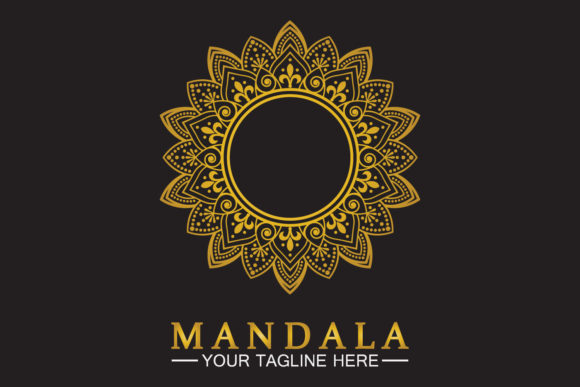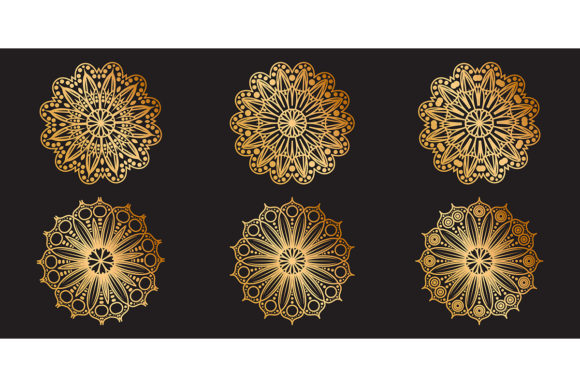
Golden Mandala Set Design. Asian, Arabia
You have likely stumbled upon a collection of Asian, Arabia and Golden mandala set design elements while searching for the perfect visual accent for your latest project. These intricate patterns blend the spiritual geometry of Eastern traditions with the ornate floral motifs of Arabian artistry, all unified by a luxurious metallic finish. However, finding the right vector isn't just about picking the prettiest image; it is about understanding how these specific designs function within your workflow. Many creators assume that because a mandala looks beautiful in a preview, it will perform equally well in print or on a digital screen. This assumption often leads to frustration when files fail to scale or colors shift unexpectedly.
The intersection of Asian and Arabian decorative styles creates a unique aesthetic that can elevate branding, interior design, and editorial layouts. Yet, without careful evaluation, you might end up with assets that are difficult to edit, legally ambiguous, or technically flawed. Let us explore what this specific design language entails and, more importantly, how to navigate the common pitfalls that trip up even experienced professionals.
Understanding the Fusion of Styles
A Golden Mandala Set Design featuring Asian and Arabian influences is not merely a random assortment of shapes. It represents a deliberate fusion where the radial symmetry found in Indian and Buddhist mandalas meets the scrolling vines and arabesques typical of Islamic art. The addition of gold tones adds a layer of perceived value and warmth, making these vectors highly sought after for luxury packaging, wedding invitations, and high-end web headers.
When you engage with these collections, you are essentially working with a visual language that speaks of heritage and elegance. However, the complexity of these designs requires a higher level of technical competence than simpler geometric patterns. If you are new to vector editing, the sheer number of anchor points in a detailed Arabian flower mandala can be overwhelming. It is crucial to recognize that "beautiful" does not always mean "efficient." A file that looks stunning at 100% zoom might contain thousands of unnecessary nodes that slow down your software or cause rendering issues during export.
Common Pitfalls in Selection and Usage
One of the most frequent mistakes designers make is overlooking the resolution requirements before downloading. Unlike raster images, vectors should theoretically scale infinitely, but this is only true if they are constructed correctly. Some low-quality sets labeled as "Golden Mandala" are actually flattened raster images disguised as vectors. When you try to enlarge these for a large-format banner, the result is a pixelated mess rather than a crisp line.
Check the file structure: Before committing to a purchase or download, open the file in your vector software and inspect the layers. Are the gold gradients applied as solid fills, or are they complex mesh gradients? Mesh gradients look realistic but can be a nightmare to edit later. For most commercial applications, flat color fills or simple linear gradients are far more versatile. They allow you to easily change the gold tone to match your brand guidelines without breaking the entire design.
Another significant oversight involves the licensing terms associated with these specific cultural designs. Because these motifs draw from rich cultural histories, some creators sell them with restrictive licenses that prohibit modification or require attribution. If you are using these elements for a client's product packaging, you need to ensure you have the commercial rights to modify the shape and color. Failing to verify this can lead to legal disputes or the need to completely redesign your asset after the work is done.
Evaluating Technical Quality and Usability
Not all golden effects are created equal. In the world of Asian, Arabia and Golden mandala set design, the term "gold" can refer to a simple yellow hex code, a complex gradient simulation, or a specialized spot color intended for printing. If your goal is digital display, a standard RGB gradient works perfectly. However, if you plan to print these mandalas on physical merchandise like business cards or textiles, relying solely on RGB values will result in dull, muddy colors.
To avoid this mismatch, always ask yourself: Where will this design live? If the answer includes print, look for sets that offer CMYK versions or specify Pantone equivalents. Using an RGB gold vector for a print job means the printer has to guess how to translate that bright, glowing yellow into ink, often resulting in a lackluster appearance that fails to convey the intended luxury.
Furthermore, consider the complexity of the decorative flower mandala collection. While a dense, highly detailed pattern looks impressive, it may not serve the functional purpose of your design. In logo design or small iconography, too much detail can cause the lines to blur together when scaled down. A professional approach involves selecting a version of the mandala that retains its core identity even at smaller sizes. If you cannot distinguish the individual petals of an Arabian flower when the image is reduced to 50 pixels, it is likely too complex for your needs.
Practical Advice for Better Results
- Test scalability immediately: Open your chosen vector and resize it to both a tiny favicon size and a massive billboard size. Ensure the lines remain crisp and the details do not disappear or become cluttered.
- Verify color modes: Check if the file provides both RGB (for screens) and CMYK (for print) options. If not, be prepared to manually convert the colors, which takes time and expertise.
- Simplify where possible: Don't be afraid to remove unnecessary background elements or overly intricate flourishes that distract from the main message. Sometimes less detail results in a stronger visual impact.
- Review the layer hierarchy: Good vector files separate the gold elements, the black outlines, and the background shapes onto different layers. This separation gives you the flexibility to recolor or hide parts of the design without affecting the rest.
Making the Right Decision for Your Project
When evaluating a Golden Mandala Set Design, think beyond the initial visual appeal. Consider the longevity of the asset. Will you be able to use this again next year? Can you adapt it for a different theme? High-quality collections are modular, allowing you to mix and match elements to create something entirely new. Low-quality sets are often rigid, locking you into a single look.
For entrepreneurs and marketers, the choice of these graphics can significantly influence brand perception. A poorly executed golden mandala can look cheap and tacky, undermining the premium feel you are trying to achieve. Conversely, a well-chosen, technically sound vector communicates attention to detail and quality. It signals to your audience that you care about the specifics of your presentation.
Ultimately, the success of incorporating Asian and Arabian mandala elements depends on your preparation. Take the time to audit the file before you start designing. Look for clean paths, logical naming conventions, and appropriate color profiles. By avoiding the common traps of assuming all vectors are equal and neglecting the output medium, you ensure that your final product is not just visually striking, but also robust and professional. Whether you are creating a website, a brochure, or a product label, a thoughtful approach to these intricate designs will yield results that stand the test of time.